
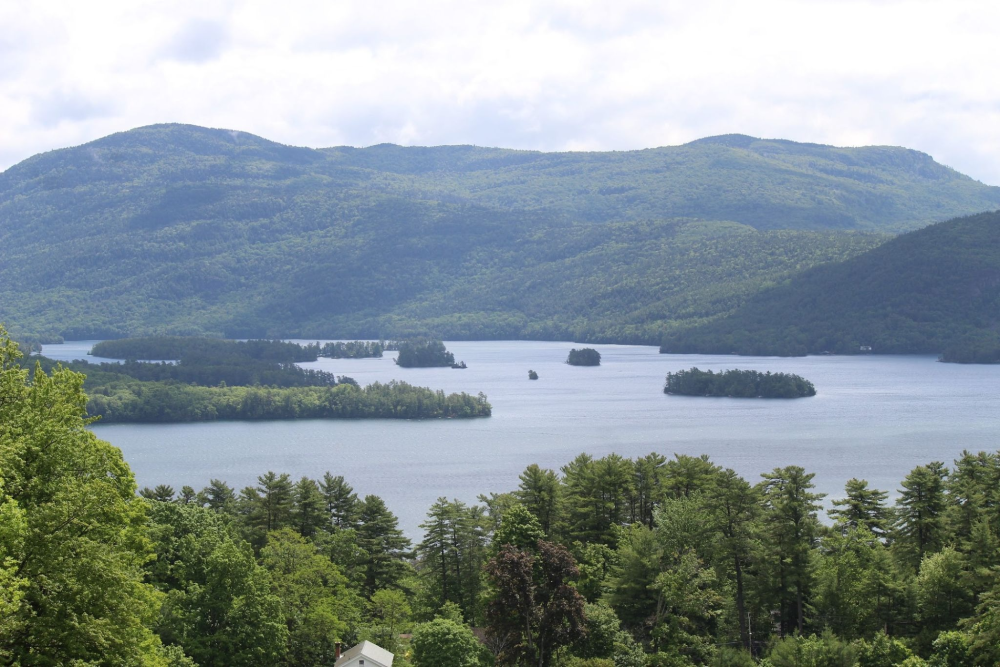
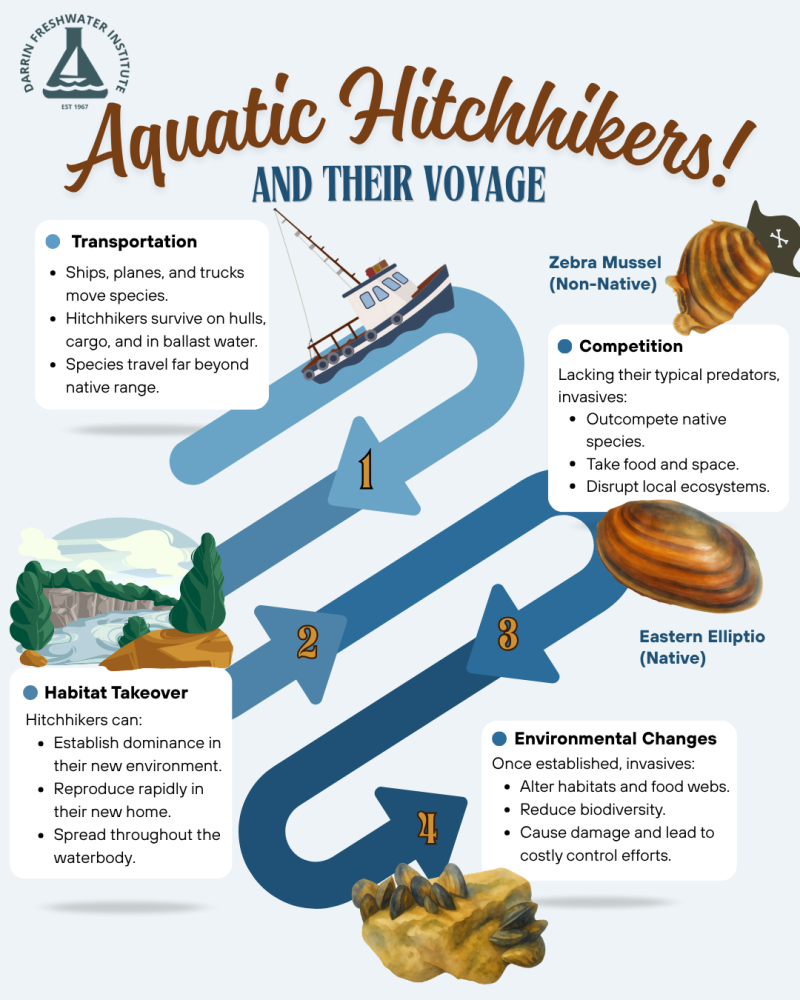
Through countless generations, plants and animals learn the rhythms of a place, the timing of spring floods, the seasonal changes, and the migrations of their neighbors. Together, they form a community, woven through relationships that have developed over centuries. With the conflict of human interruption, a hitchhiker arrives from far away, carried not by wind or water, but by the manmade objects used for transport day in and day out. Maybe it was hidden in ballast water, or clinging to a boat hull, after a long journey species may find themselves in unfamiliar waters.
Many of these accidental travelers never survive these new environments. A new landscape comes with new obstacles, many harsh. Other species, however, discover conditions that allow them to flourish beyond what was intended. In special cases, these species find themselves freed from predators and competitors that kept them in balance in their native home (Tobin, 2018).
Change is a natural characteristic of every ecosystem. Shorelines may shift, trees may grow or die, and species may come and go. But invasive species often bring a different kind of change, one that occurs faster than native communities can adapt. As ecological damage increases, so too does the costs of restoration, requiring increasing investments of time, labor, and resources each year.
According to Executive Order 13112, a non-native species is any organism found outside its natural range, whether introduced from another continent or transported from one region of the United States to another. An invasive species is one whose presence causes environmental harm, economic damage, or risks to human health. While native species sometimes display invasive characteristics, this phenomenon is far more common among introduced species.
Across the globe, the land has stories to tell, often intertwined with our own movements across continents. Lake George, unfortunately, is no exception. Beneath its sparkling, clear waters, the native species compete in their home with invasive species that have arrived through human activity. Understanding these invaders and our role in their spread is a step toward becoming environmental stewards.
Meet Some Current Lake George Invasive Species
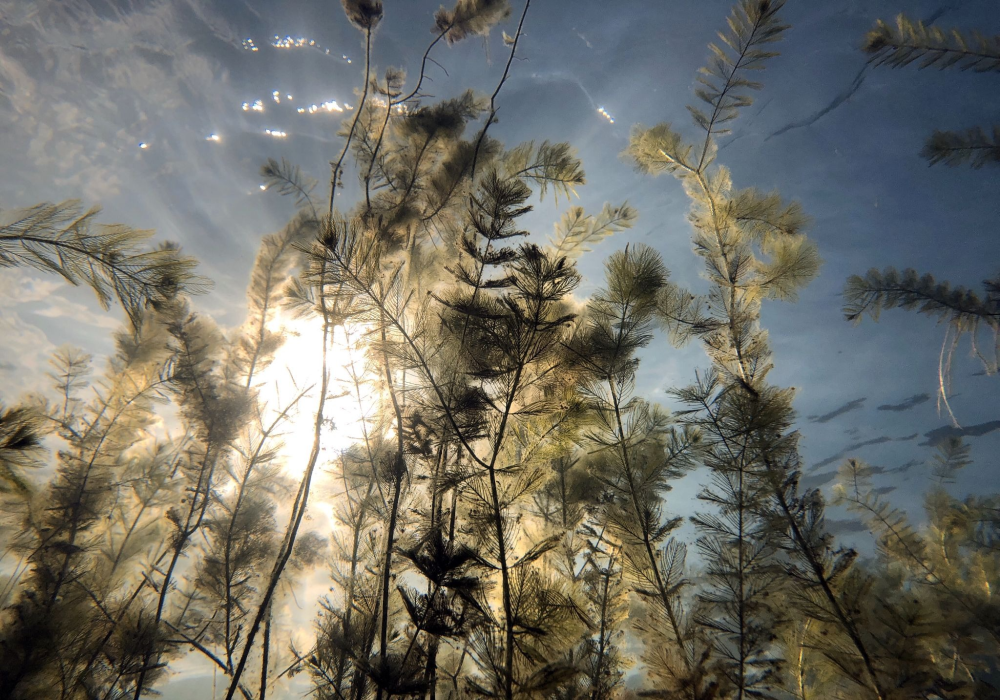
Eurasian watermilfoil (M. spicatum)
The Eurasian watermilfoil was first found on Lake George in 1986. Over the past 30 years, The Lake George Park Commission has reported that over five million dollars has been spent managing this invasive species (Invasive Species Management, 2026). The Eurasian watermilfoil takes up space from potential native plants and can block sunlight, making it hard for natives to access resources. This fact can negatively impact the current native species living in Lake George.
To learn more about this invasive species, the research, and potential concerns take a look at Darrin Freshwater Institute’s ASSEMBLE Report, sponsored by the Lake George Park Commission.
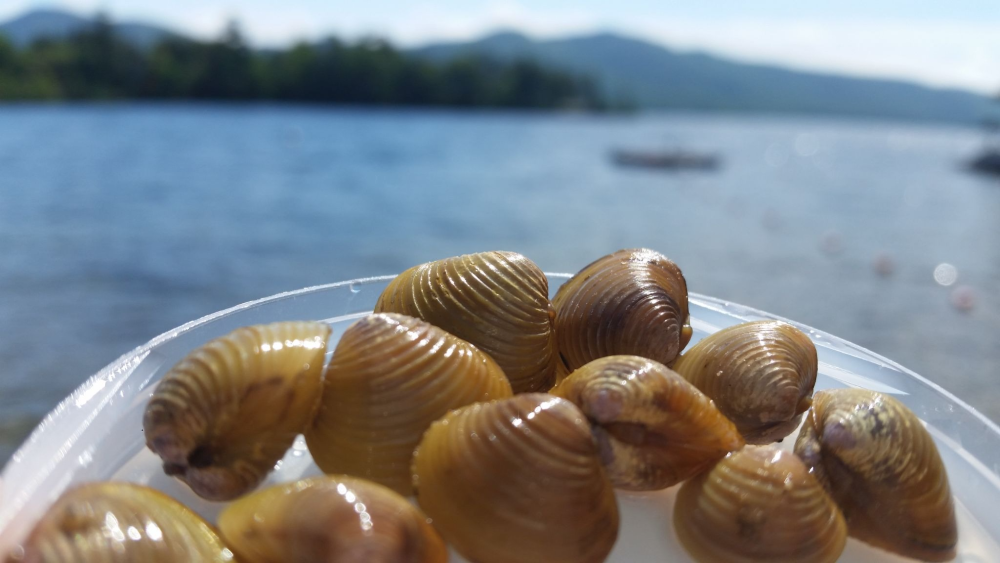
Asian Clam (C. fluminea)
Another species that made its way to Lake George in 2010 is the Asian Clam, another case of boating transportation bringing in invasive species. Asian Clams can be extremely destructive freshwater invaders; they outcompete native species for food, and can clog intake filtration pipes, damaging infrastructure by biofouling. In response, the Lake George Asian Clam Rapid Response Task Force has spent over a million dollars on management efforts since 2010 (Invasive Species Management, Lake George Park Commission). The Task Force worked to remove these invasive species by installing plastic matting and sandbags over acres of areas with the Asian Clams (a technique originally developed in Lake Tahoe).
The issue with Asian Clams goes much deeper than just destroying infrastructure; they also affect the native bivalves in Lake George. When they are abundant, they take up lots of room in the sand and consume a lot of resources, removing space and food for native species (Invasive Species Management, Lake George Park Commission). These clams are also great reproducers! Just one clam can release over 1,000 babies, allowing them to spread prolifically, further exacerbating the issue.
To learn more about this invasive species, the research, and potential concerns take a look at Darrin Freshwater Institute’s ASSEMBLE Report, sponsored by the Lake George Park Commission.
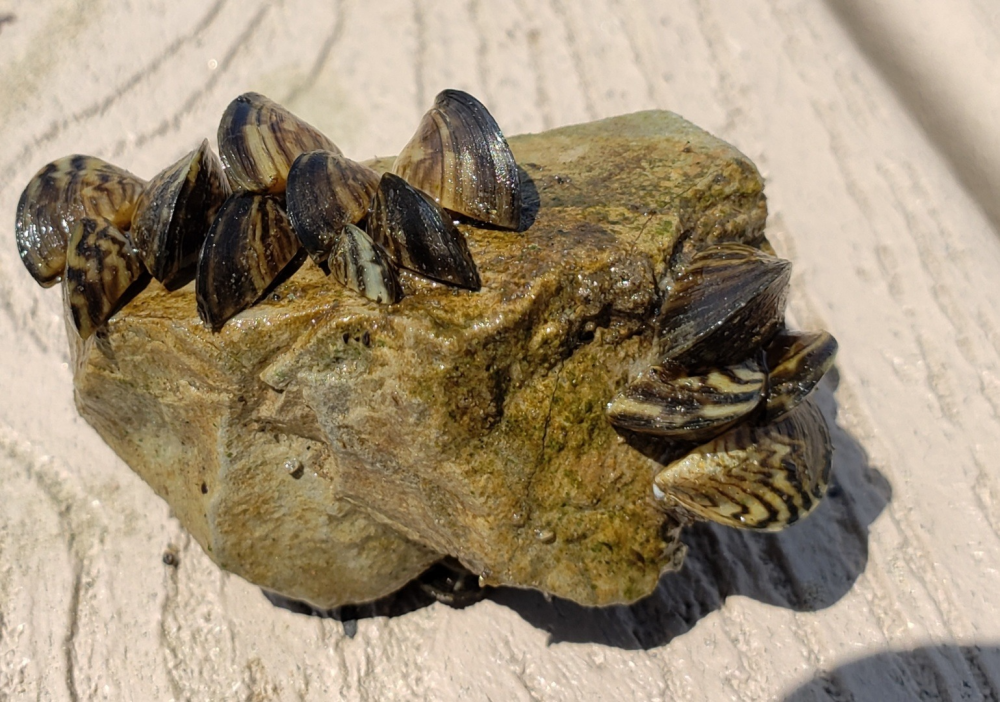
Zebra Mussels (D. polymorpha)
There is another invasive bivalve that made its way into Lake George's waters. Zebra Mussels were discovered in Lake George in 1999. These invasive bivalves pose similar threats as the Asian Clam as they affect water supplies, recreation, and more. This is due to their abrasive ways of living; they can foul boats and boat engines much like the Asian Clam, and can clog water intake pipes, affecting the lake's ecosystem (Zebra Mussel, Lake George Association). Luckily, the Zebra Mussel population is still relatively small since Lake George does not have enough calcium for young Zebra Mussels to build their shells.
To learn more about this invasive species, the research, and potential concerns take a look at Darrin Freshwater Institute’s ASSEMBLE Report, sponsored by the Lake George Park Commission.
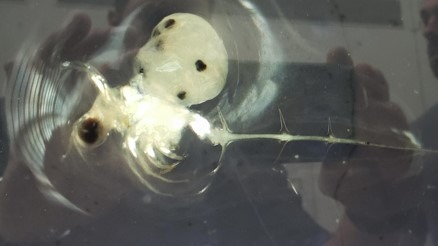
Spiny Water Flea (B. longimanus)
The Spiny Water Flea is an invasive aquatic zooplankton native to Northern Europe and Asia that was first discovered in Lake George in 2012. This invasive species does not cause a direct threat to humans or pets, but it can disrupt aquatic ecosystems because it reproduces rapidly, which causes competition with native species for food (Adirondack Park, Invasive Plant Program). This invasive species is of particular interest to scientists since it seems to come and go without rhyme or reason. It can seemingly disappear for years and then reappear without warning. Over the past 10 years, Darrin Freshwater Institute scientists have been cataloging Spiny Water Flea abundance to try to find drivers for these sudden changes.
To learn more about this invasive species, the research, and potential concerns take a look at Darrin Freshwater Institute’s ASSEMBLE Report, sponsored by the Lake George Park Commission.
Keep a Lookout for Potential Hitchhikers!
Who May be Knocking on our Doorsteps?
The species mentioned below, are potential hitchhikers that are getting closer and closer to Lake George. The best way to stop an invasive species, is to stay educated, aware, and report any sightings close by or on Lake George itself to local organizations such as:
- Darrin Freshwater Institute
- Report Water Quality Concerns | Lake George Association
- Invasive Species Management | Lake George Park Commission
Rusty Crayfish (F. rusticus)
The Rusty Crayfish have been observed around parts of New York such as Albany, Chenango, and Broome (U.S. Geological Survey). They can be found in anything from lakes to streams. These crayfish can pose a threat to native species by reducing the amounts of aquatic plants, invertebrates, and food availability (Adirondack Invasive Plant Program).
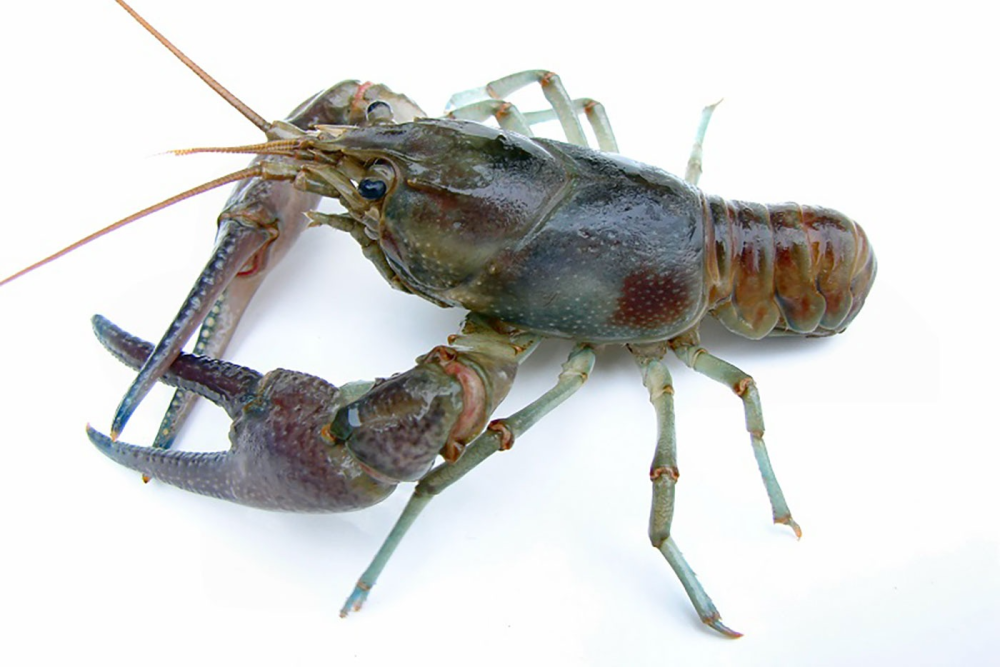
Photo: Invasive Species Management Adirondacks
Bloody Red Shrimp (Hemimysis anomala)
The Bloody Red Shrimp was first found in the Great Lakes through ship ballast waters. They like to live in areas with rocky bottoms, and in deeper water. Currently there is not much known about their impacts but their food preference being that of zooplankton could potentially impact food availability for small fish species (Western New York Partnership for Regional Invasive Species Management).
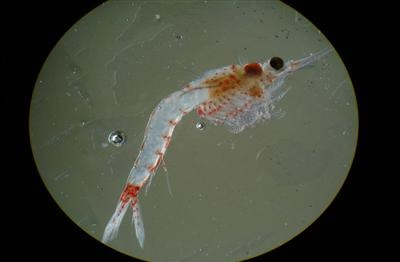
Photo: Sea Grant University of Wisconsin
Water Chestnut (Trapa natans)
Water Chestnut has been found throughout parts of New York, including the Hudson River, Mohawk River, and numerous lakes and ponds. It's mostly found in slow-moving water and forms dense structures. They pose a threat because they constrict sunlight from reaching native aquatic plants, and can interfere with recreational activities (New York Invasive Species Information).
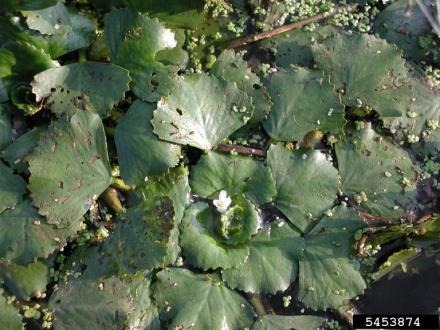
Photo: Leslie J. Mehrhoff, University of Connecticut, Bugwood.org
Hydrilla (Hydrilla verticillata)
Hydrilla has been detected in several regions of New York, like the Finger Lakes, Long Island, and the Cayuga Inlet. It can grow rapidly and can cover a lot of area in lakes, and rivers. Hydrilla can disrupt water flow, impede recreational activities, and outcompete native aquatic plants for sunlight and nutrients (New York Invasive Species Information).
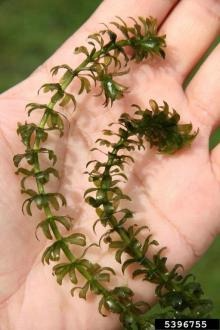
Photo: Bugwood.org
Rock Snot (Didymosphenia geminata)
Rock Snot has been found in several New York waterways, particularly cold, nutrient-poor rivers and streams. This invasive species attaches itself to rocks and produces thick slimy mats. These microscopic algae take up surface area, smothering native organisms and reducing food availability (New York Invasive Species Information).
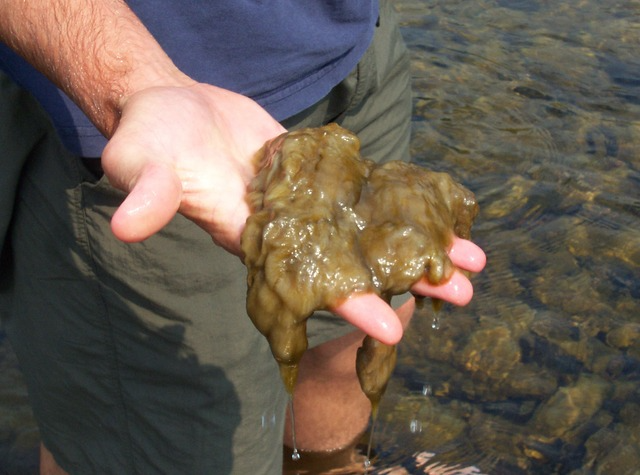
Photo: Tyler Baker
What can you do about the invasive species?
1. Teach others about these species on Lake George. Such as how to identify it, how it gets transported, and the threats it may have.
2. Make sure to visit a boat wash station when moving boats between lakes and make sure your boat is clean, drained, and dry before launching. When Boating Arrives Clean, Drained, and Dry.
3. If you are fishing or wearing waders, be sure to wash off any items you wear and dry them fully.
4. Stay observant on the lake, which means to look at docks, boats, hulls, anchors, and more to see if there are any invasive species attached.
5. Participate in local events for New York’s Invasive Species Awareness Week 2026- with places like NYIS, which host educational events on invasive species.
6. Report any invasive species you find to the Darrin Freshwater Institute, Lake George Association, and the Lake George Park Commission.
(Stop Invasive Species, LGA)
(ASSEMBLE, 2024)
References
1. Tobin PC. Managing invasive species. F1000Res. 2018 Oct 23;7:F1000 Faculty, Rev-1686. doi: 10.12688/f1000research.15414.1. PMID: 30416712; PMCID: PMC6206619.
2. “Invasive Species Management.” Lake George Park Commission, lgpc.ny.gov/invasive-species-management. Accessed 8 June 2026.
3. “Stop Invasive Species.” Lake George Association, lakegeorgeassociation.org/act-now/stop-invasive-species. Accessed 8 June 2026.
4. “Zebra Mussel.” Lake George Association, lakegeorgeassociation.org/science-protection/community-science/zebra-mussel. Accessed 8 June 2026.
5. “Spiny Waterflea.” Adirondack Park Invasive Plant Program (APIPP), 9 May 2026, adkinvasives.com/invasives/spiny-waterflea/
6. Lake George Park Commission. (2024). ASSEMBLE: Amalgamating scientific studies (Final report). Lake George Park Commission. ASSEMBLE Final Report
7. U.S. Geological Survey. (n.d.). Rusty crayfish (Species ID 214): Collection information for New York. Nonindigenous Aquatic Species Database. USGS NAS Rusty Crayfish Collection Information
8. Adirondack Invasive Plant Program. (n.d.). Rusty crayfish. Adirondack Park Invasive Plant Program. Rusty Crayfish Fact Sheet
9. Western New York Partnership for Regional Invasive Species Management. (n.d.). Bloody red shrimp. WNY PRISM. Bloody Red Shrimp Profile
10. New York Invasive Species Information. (n.d.). Water chestnut (Trapa natans). New York Invasive Species Information. Water Chestnut Profile
11. New York State Department of Environmental Conservation. (n.d.). Hydrilla. New York State Department of Environmental Conservation. DEC Hydrilla Information
12. New York Invasive Species Information. (n.d.). Rock snot (Didymosphenia geminata). New York Invasive Species Information. Rock Snot (Didymo) Profile