
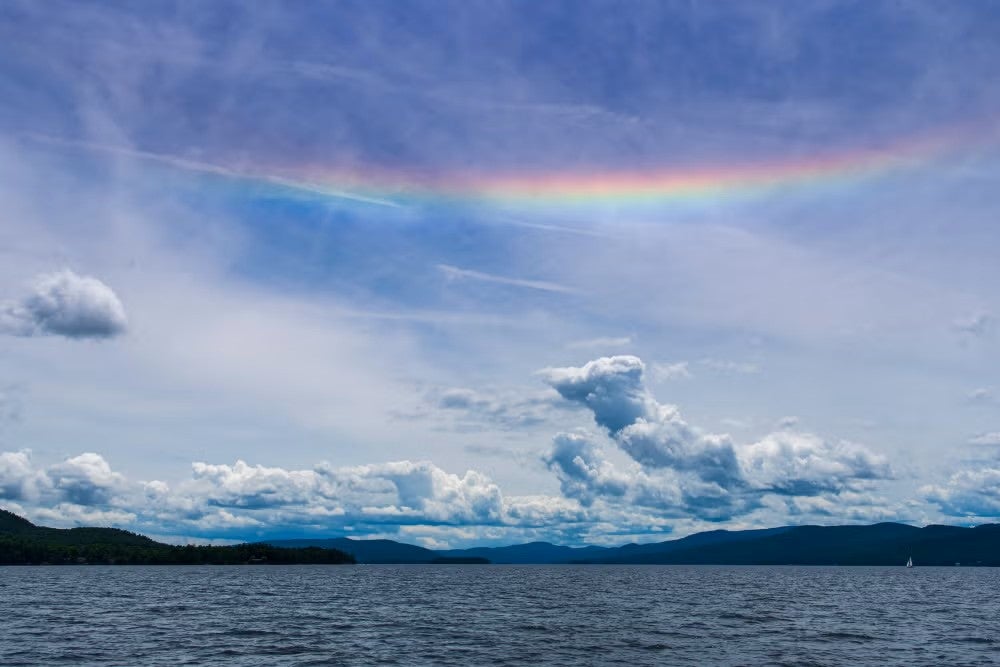
Our planet is full of vibrant species all over the world. Every color in the rainbow can be found in Lake George and its surroundings. Take for instance just the colors of the natural surroundings, like where the clouds consume the mountains on a misty morning or in the evenings, when the sky turns pink and orange creating a hue of soft light touching your skin. Even when the water glistens and sparkles from the sun on a summer day.
That is just a sliver of what beauty Lake George holds. When we look at biotic characteristics things get even more beautiful. If you sit on the porch just long enough at night your light may just attract stunning moths with wings created through years of evolution for survival. Maybe you walk through the woods after a rain storm and find a red eft newt laying in a bed of bright green moss. Then, on the same trail, a warbler treats you to the sight of its yellow feathers.
Wherever you go, and wherever you look, you will find that there are gifts all around us that we are lucky to experience here on Lake George. This blog post will take you through a colorful journey of species that you can find all around Lake George, if you only look!
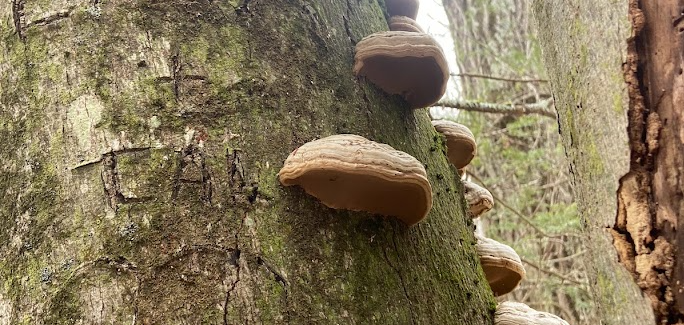
Photo: Jasmine Antonucci
White
Tinder Polypore (F. fomentarius)
Fungi are mysterious and diverse, they come in many forms and grow in all different places. Each serving a different purpose, the Tinder Polypore is known to be used to start fires with the latin behind its name Fomes “tinder” and fomentarius “used for tinder.” They grow year round on deciduous trees, living or dead, becoming thicker and more hoof-like with time. They are known as parasites to trees, but can become decomposers once the trees have died. Fungi is often associated with moisture and dense forests, but this polypore provided fire for people, including many indigenous peoples, dating back hundreds of years. The Cree used Tinder Polypore, known as posâkan to them, as an important fire starting source, which was essential for heat and cooking (1). Additionally the Sámi also used F. fomentarius to start fires in colder climates (2). Tinder Polypore is still used today by indigenous people, hikers, and foragers. These are just a few examples of the Tinder Polypores long history and significance.
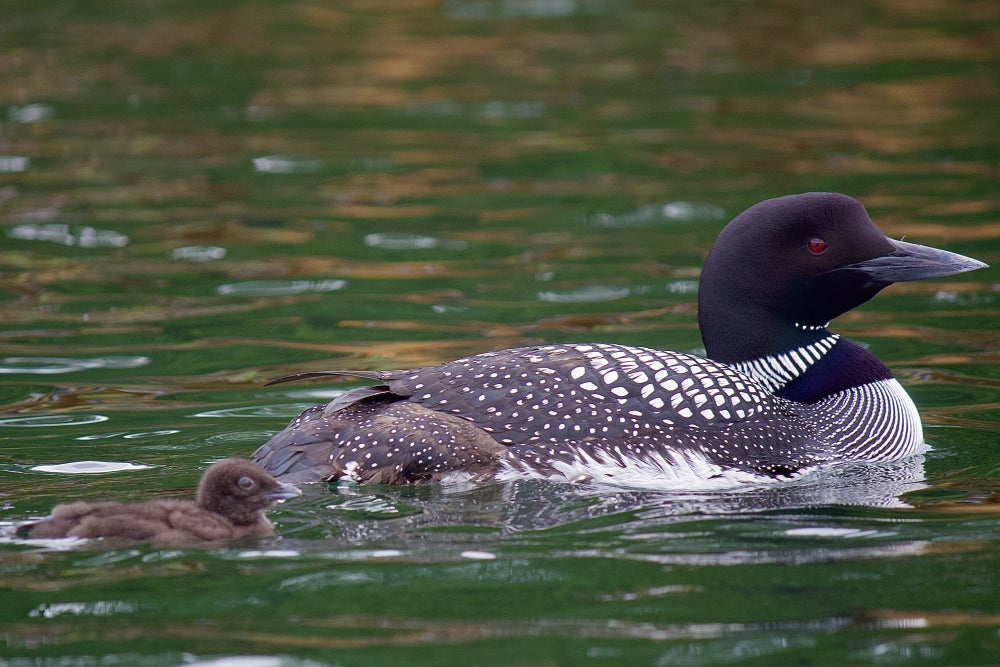
Photo: Jasmine Antonucci
Black
Common Loon (G. immer)
On Lake George you may hear loud, eerie calls. This strange sound is likely coming from the Common Loon, a strikingly beautiful species with patterns almost matching the top of the water when it reflects from the sun. The Common Loon is found all over the world, but it is truly something special when you lay eyes on their beauty in the water. Unlike other kinds of birds, G. immer has dense bones to help them dive 200 to 250 feet deep in pursuit of prey. However, these dense bones make them heavy, which makes it harder to “take off.” Loons are mainly piscivorous, which means they have a diet that is mostly fish. They are commonly known to hunt and eat fish like blue gills, and yellow perch (3). Human activity poses the biggest threat towards loon populations, including reduced habitat, fishing line, litter, and disturbing nests. Be mindful when you are out enjoying the show they put on in the water, and keep our waters clean (4).
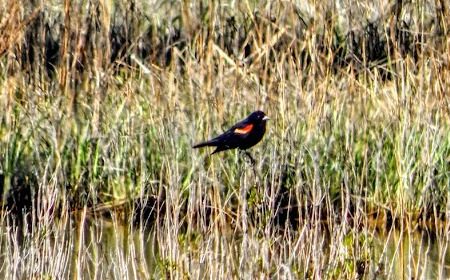
Photo: Jasmine Antonucci
Red
Red-winged Blackbird (A. phoeniceus)
The Red-winged Blackbird at first glance may seem like nothing special until it opens its wings to reveal a patch of bright red feathers on both sides. Suddenly it's a whole new bird, and you can spot it from anywhere once you notice those hidden colors. These are one of the most common birds to see in North America. These birds are often found near marshes, wetlands, and grassy fields, where they feed on insects, seeds, and grains. Males are especially territorial during the breeding season and can often be heard singing their distinctive “conk-la-ree” call. Females are brown, helping them blend into their surroundings while nesting. Red-winged blackbirds play an important role in their ecosystems by helping control insect populations (5).
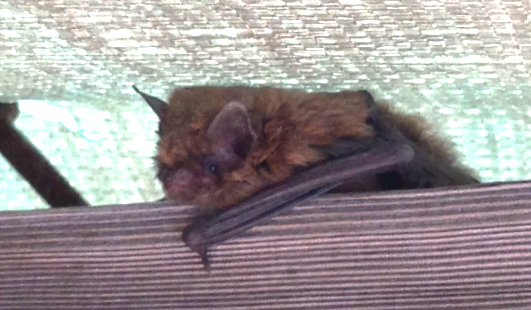
Photo: Mitch LeSage
Brown
Little Brown Bat (M. lucifugus)
The Little Brown Bat can be seen flying at dusk and later into the night feeding on little midges and mayflies flying around. These bats can roost everywhere from attics to behind peeling tree bark to abandoned mines and caves. These bats are threatened by White-nose Syndrome, which is a deadly fungal disease. Like the Red-winged Blackbird, Little Brown Bats are extremely beneficial to the environment because they help control insect populations naturally. By keeping insect populations balanced, they help prevent outbreaks that could disrupt food chains and damage plants. Their presence is a sign of a healthy environment, making them an important part of North America's natural ecosystems. Protecting little brown bats helps support biodiversity and ensures that ecosystems continue to function properly (6).
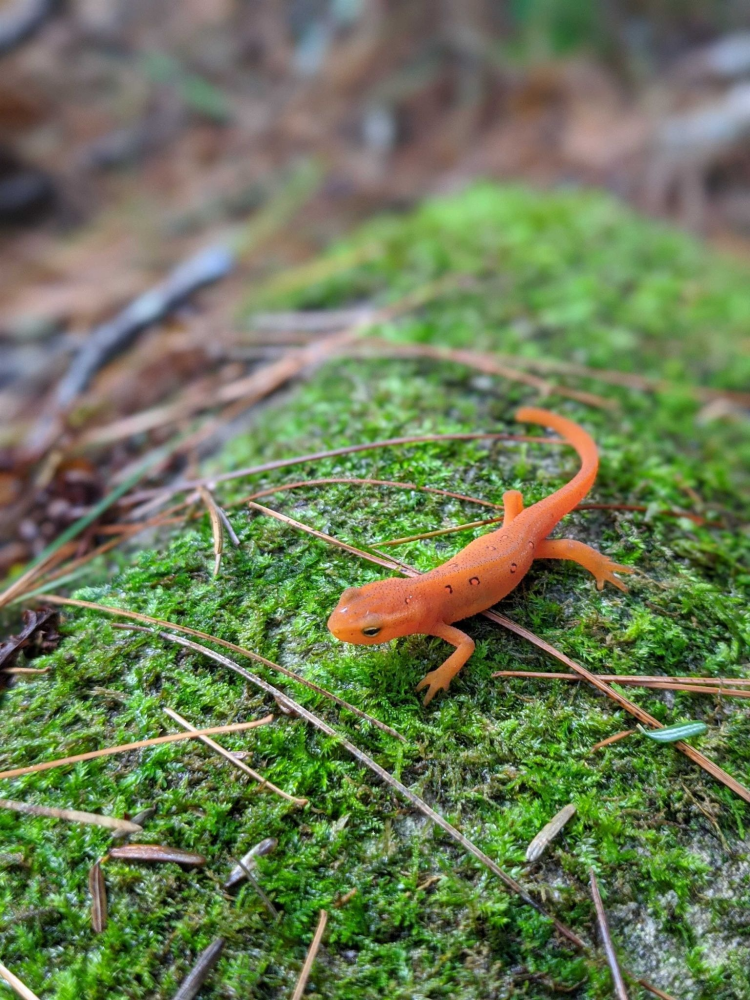
Photo: Brian Mattes
Orange
Red-Spotted Newt (N. viridescens)
When hiking the trails around Lake George, especially through damp forests with moss-covered logs, leaf litter, and moist soil after a rainfall, you may be lucky enough to spot the Red-Spotted Newt, also known as “Red Efts” while in their juvenile stage. These fascinating amphibians are easily recognized by the bright red or orange spots scattered across their bodies. Red-spotted Newts spend part of their lives on land and part in ponds and wetlands, making them an important link between aquatic and forest ecosystems. They play an important role in the environment by feeding on insects, worms, slugs, and other small invertebrates, helping to keep these populations in balance. In turn, they provide food for birds, snakes, fish, and other wildlife. Red-spotted Newts are also considered indicator species because they are sensitive to pollution, habitat destruction, and changes in water quality. Their presence in the forests and wetlands around Lake George is often a sign of a healthy ecosystem. By contributing to biodiversity and helping maintain ecological balance, these small amphibians play an important role in the natural environment (7).
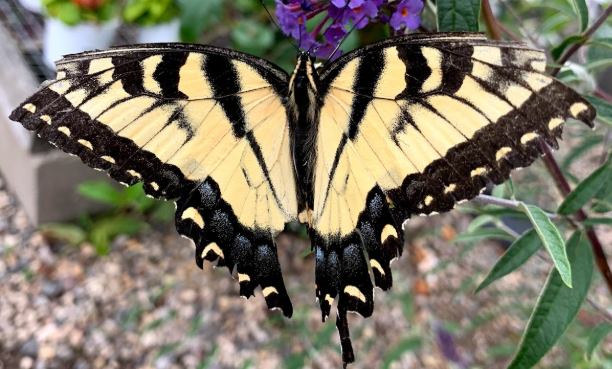
Photo: Jasmine Antonucci
Yellow
Eastern Tiger Swallowtail (P. glaucus)
When meandering along flowering woodland edges around Lake George, you may spot the Eastern Tiger Swallowtail, one of the most recognizable butterflies in North America. These butterflies are easily seen by their bright yellow wings marked with black “tiger” stripes. As adults, they feed on nectar from a variety of flowers, while their caterpillars feed on the leaves of many native trees. Their role in the ecosystem is important because they help pollinate flowering plants as they move from flower to flower in search of nectar. In addition, they serve as a food source for birds, and other predators, making them an important part of local food webs. (8)
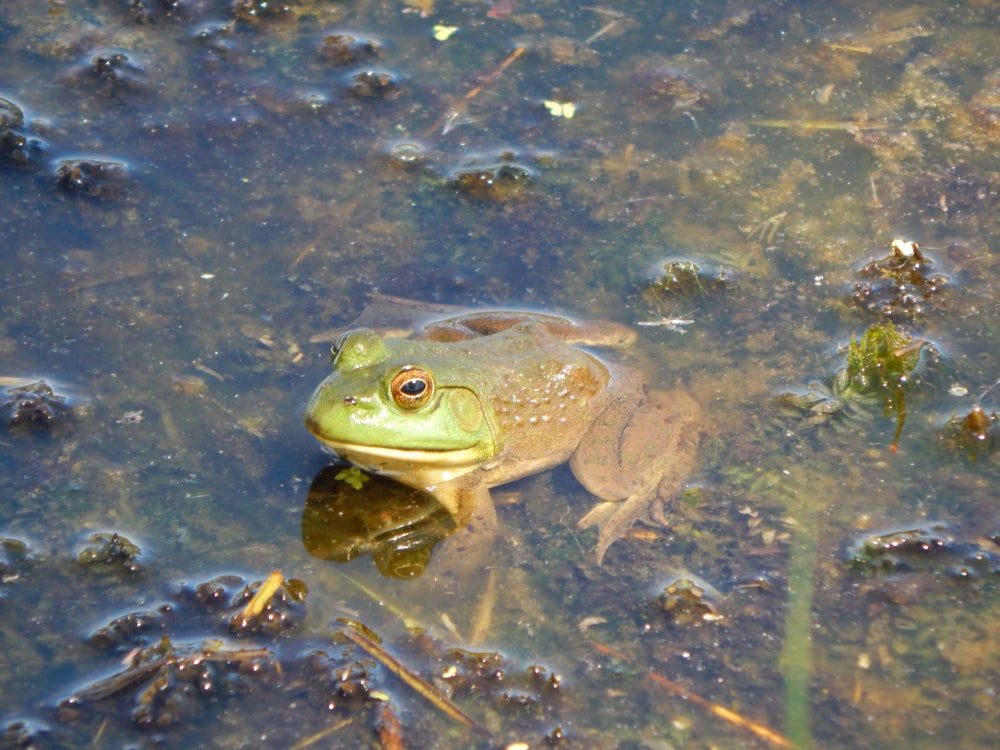
Photo: Jasmine Antonucci
Green
Green Frog (L. clamitans)
When exploring Lake George, you may hear the unique call of the Green Frog. These amphibians are typically green or brown in color and are often recognized by the ridges running down their backs. Green Frogs are commonly found near lakes, marshes, swamps, and slow-moving streams. Green Frogs play an important role in the ecosystem by feeding on insects which help to keep these populations in balance. They also provide food for fish, turtles, birds, and more! Green Frogs depend on clean, healthy freshwater habitats, so their presence is often a sign of a thriving ecosystem. (9)
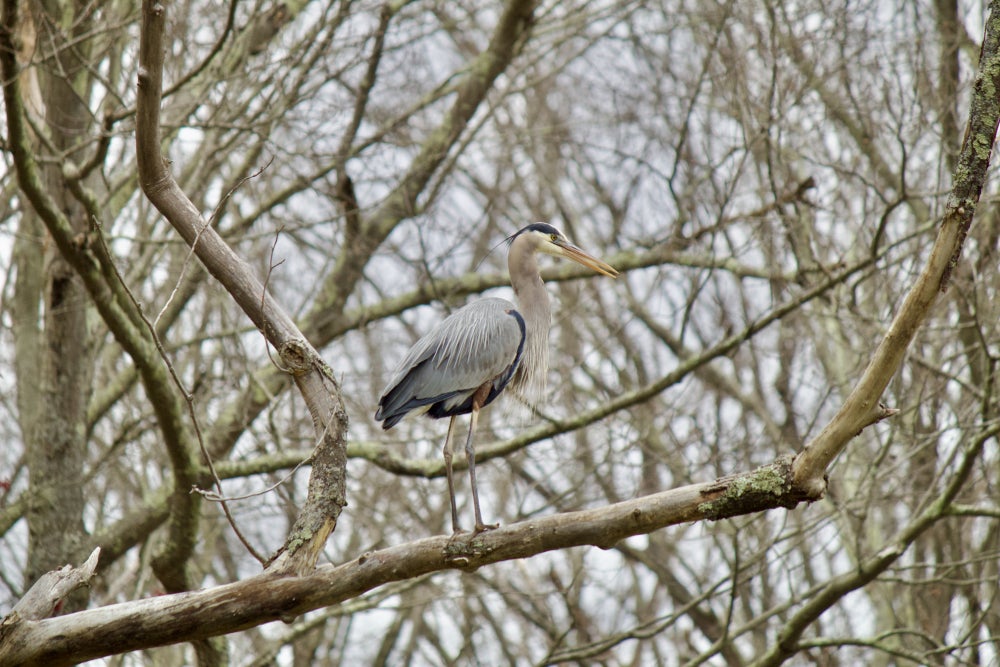
Photo: Jasmine Antonucci
Blue
Great Blue Heron (A. herodias)
As you move across Lake George slowly on a boat, on a kayak, or just on a walk, you may spot the Great Blue Heron standing motionless along the water’s edge. With its long legs, graceful neck, and blue-gray feathers, this bird is the largest heron in North America. They are patient and observant, often waiting in silence before striking at small prey. They play an important role in wetland ecosystems by helping control populations of aquatic animals. Watching a heron patiently hunt or slowly glide across a lake reminds us of the quiet rhythms of nature and the importance of protecting the wetlands that support so many species. (10)
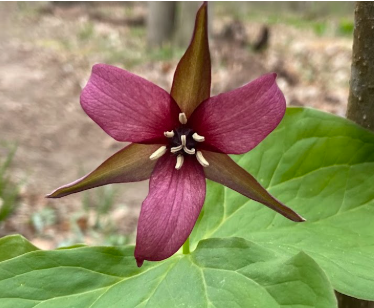
Photo: Jasmine Antonucci
Pink
Trillium Flower (T. erectum)
The wooded trails around Lake George in late spring are often dotted with the blooms of Trillium. This native wildflower is easy to recognize by its three broad leaves, three dark pink/purple petals, and a single flower rising above the forest floor. It is most commonly found in rich, moist hardwood forests, where it thrives in well-drained soils and partial shade. Trillium is a slow-growing perennial that can take several years to reach flowering size! As one of the region's iconic spring wildflowers, its presence is often considered a sign of a healthy, undisturbed woodland ecosystem. (11)
References:
(1) Nancy J. Turner and Alain Cuerrier. ‘Frog’s umbrella’ and ‘ghost’s face powder’: the cultural roles of mushrooms and other fungi for Canadian Indigenous Peoples. Botany. 100 (2): 183-205. 2022.
(2) Svanberg, Ingvar. Ethnomycological Notes on Haploporus Odorus and Other Polypores in Northern Fennoscandia.
(3) Byrd, Allison. Common Loon (Gavia immer) Biogeography and Reproductive Success in an Era of Climate Change. Master's thesis, The University of Maine.
(4) Common Loon | Minnesota DNR, www.dnr.state.mn.us/birds/commonloon.html. 2026.
(5) “Red-winged Blackbird.” All About Birds, Cornell Lab of Ornithology, https://www.allaboutbirds.org/guide/Red-winged_Blackbird/overview. 2026.
(6) Bat Conservation International. “Meet the Little Brown Bat.” Bat Conservation International, 24 Sept. 2020, Bat Conservation International article. Accessed 29 June 2026
(7) Mitchell, Joseph C. “Red-spotted Newt (Notophthalmus viridescens viridescens).” Virginia Herpetological Society, Virginia Herpetological Society, https://www.virginiaherpetologicalsociety.com/amphibians/salamanders/red-spotted-newt/index.php. Accessed 29 June 2026
(8) Roof, Jennifer. “Papilio glaucus.” Animal Diversity Web, University of Michigan Museum of Zoology, 7 June 1999, Animal Diversity Web: Papilio glaucus. Accessed 1 July 2026
(9) Gillilland, Merritt. “Green Frog (Lithobates clamitans).” Animal Diversity Web, University of Michigan Museum of Zoology, https://animaldiversity.org/accounts/Lithobates_clamitans/. Accessed 1 July 2026.
(10) Cornell Lab of Ornithology. “Great Blue Heron Overview.” All About Birds, Cornell Lab of Ornithology, https://www.allaboutbirds.org/guide/Great_Blue_Heron/overview. Accessed 1 July 2026.
(11) Wild Adirondacks. (n.d.). Purple trillium (Trillium erectum). https://wildadirondacks.org/adirondack-wildflowers-purple-trillium-trillium-erectum.html